
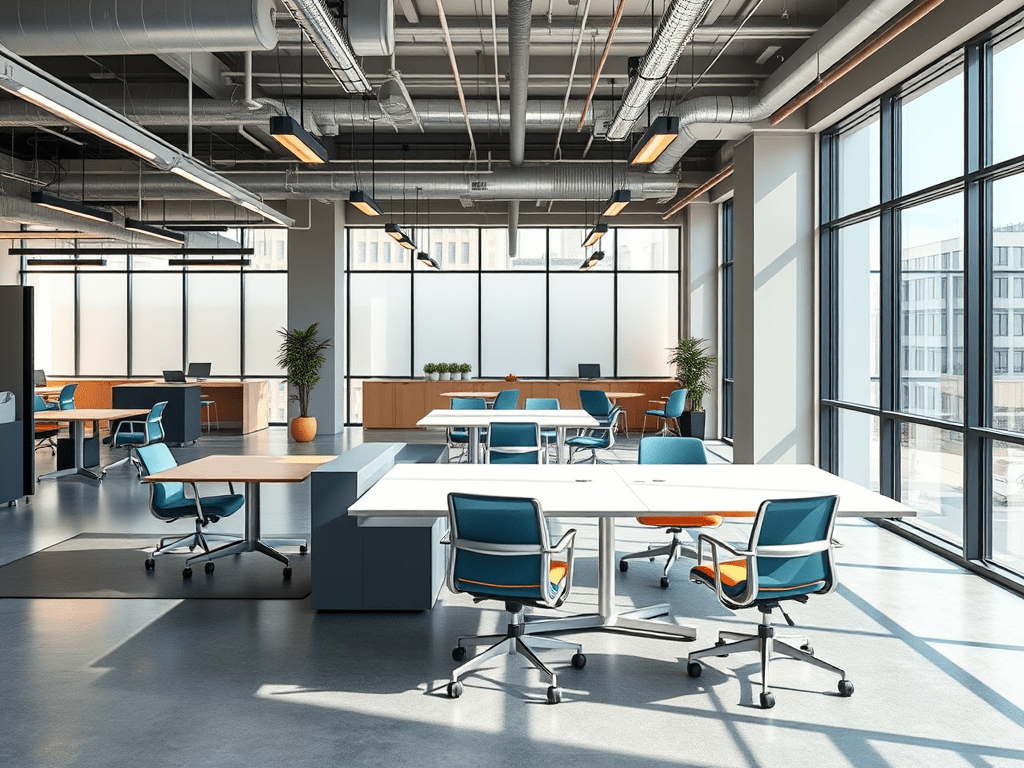
The workplace of today is in constant flux. Teams grow, project scopes shift, and hybrid work environments continue to redefine how—and where—we work. In this landscape of transformation, the design of office space must keep pace. One of the most effective tools for enabling this adaptability is breakout office furniture.
More than a trend, breakout furniture is a strategic response to the evolving demands of agile work. By providing employees with dynamic spaces that serve multiple functions, breakout areas are becoming essential to modern office layouts. In this article, we’ll explore how this type of furniture supports agile teams, improves collaboration, and encourages a healthier, more productive work culture.
Understanding Agile Work and Its Spatial Needs
Agile teams thrive in environments that support rapid iteration, spontaneous collaboration, and flexible workflows. Traditional fixed workstations often fail to accommodate these needs, creating barriers to communication and creativity. In contrast, breakout zones allow for:
- Quick stand-up meetings
- Informal brainstorming sessions
- Short breaks that enhance mental clarity
- Autonomous work away from busy open offices
For agile teams that shift tasks and team configurations frequently, breakout furniture provides the mobility and adaptability required for seamless performance.
What Makes Breakout Furniture “Agile-Friendly”?
Breakout furniture is distinguished by its ability to serve multiple purposes without needing permanent installation or heavy reconfiguration. Key characteristics include:
- Modularity: Pieces that can be rearranged easily to suit different group sizes or meeting types.
- Mobility: Lightweight or wheeled furniture that can be moved quickly.
- Ergonomics: Comfortable options that encourage proper posture even in informal settings.
- Integration: Tech-ready elements like power outlets or digital display mounts.
This type of furniture promotes a fluid work environment where form follows function—and function can change by the hour.
Designing for Agility: Best Practices
Creating effective breakout spaces for agile teams requires more than a few bean bags and whiteboards. It demands an intentional approach that blends form, function, and culture.
Here are several tips for optimizing breakout areas:
- Balance privacy and openness: Include both open collaborative zones and semi-enclosed quiet nooks.
- Support visual thinking: Install writable surfaces or provide mobile whiteboards to capture ideas on the fly.
- Encourage movement: Standing desks, bar-height tables, and soft seating invite different working postures.
- Keep things modular: Opt for sectional sofas or stackable chairs that can be reshaped based on daily needs.
- Enable tech access: Ensure strong Wi-Fi coverage and power sources for seamless device usage.
These practices empower agile teams to self-organize and work in ways that suit their rhythm, increasing both satisfaction and output.
Benefits Beyond Teamwork
While breakout furniture is particularly effective for agile teams, its advantages extend across entire organizations. These spaces contribute to a culture of trust and autonomy by giving employees control over how they work.
Additional benefits include:
- Reduced meeting fatigue: Quick catch-ups in relaxed settings are more energizing than formal conference calls.
- Improved communication: Casual interactions in shared spaces help break down silos.
- Faster decision-making: When spaces facilitate quick conversations, blockers are resolved more rapidly.
- Well-being support: Comfortable, flexible areas support mental health and lower stress levels.
Moreover, introducing breakout areas shows employees that their needs and preferences are valued—something especially important in retaining top talent.
Adaptability Without Renovation
One of the strongest arguments in favor of breakout office furniture is that it allows companies to introduce flexibility without costly structural changes. Many agile teams work in fast-paced industries where long-term leases and fixed layouts are incompatible with growth.
With breakout zones, companies can:
- Repurpose underutilized areas (e.g., corridors, lobbies, corners)
- Pilot new layouts without permanent fixtures
- Expand or reduce spaces in response to team changes
- Move furniture between departments with minimal effort
This level of adaptability is critical in an economic climate where businesses must scale quickly and efficiently.
Breakout Furniture and the Future of Work
Agile methodologies are not limited to the tech world—they’re increasingly used in marketing, product development, HR, and even finance. As such, organizations across all industries are reevaluating how their office designs support these modern workflows.
Breakout office furniture is no longer a “nice-to-have.” It is an infrastructure asset for organizations that prioritize speed, collaboration, and innovation. The physical environment is a silent partner in any agile project, and the right furniture can either enhance or hinder a team’s success.
This shift is already well underway, as highlighted by resources like
https://londonite.co.uk/modern-breakout-office-furniture-transforming-workspaces-for-the-future/, which explore how furniture design is responding to the challenges of modern workspaces.
Conclusion: Building Offices That Move With You
In today’s fast-paced work culture, the ability to pivot is everything. Agile teams need physical environments that mirror their operational philosophy: flexible, efficient, and people-focused. Breakout furniture provides that flexibility—without the overhead of large renovations or complex installations.
By investing in agile-friendly breakout zones, companies aren’t just upgrading their interiors—they’re investing in the mental agility, collaboration, and satisfaction of their workforce. And in a business landscape defined by change, that might be the smartest investment of all.
 Max Furniture